


In journalistic circles the inflammatory rape story concocted by Rolling Stone magazine was one often referred to as just “Too good to verify.”
The story fit the magazine, women’s groups and the news media’s ongoing agenda about crimes against women so perfectly that there was no real need to prove its truth.
And now we are finding out that it wasn’t true. The story has now produced the exact opposite reaction to what it hoped to prove.
The original narrative involved a bunch of white college fraternity guys at a rich college (University of Virginia) who were accused of gang-raping an innocent female student at a pledge party on campus. (See Duke lacrosse team.)
The ink was still wet on the magazine’s pages when protests broke out at Virginia and other college campuses across the country against the crime. Virginia closed all 31 of its fraternities and 16 sororities. The accused fraternity had windows broken out, was boarded up and closed.
Women’s groups went on every media outlet available to express their shock at the horror of it all. In media circles it is said the “story had legs,” which meant it could be rehashed over and over.
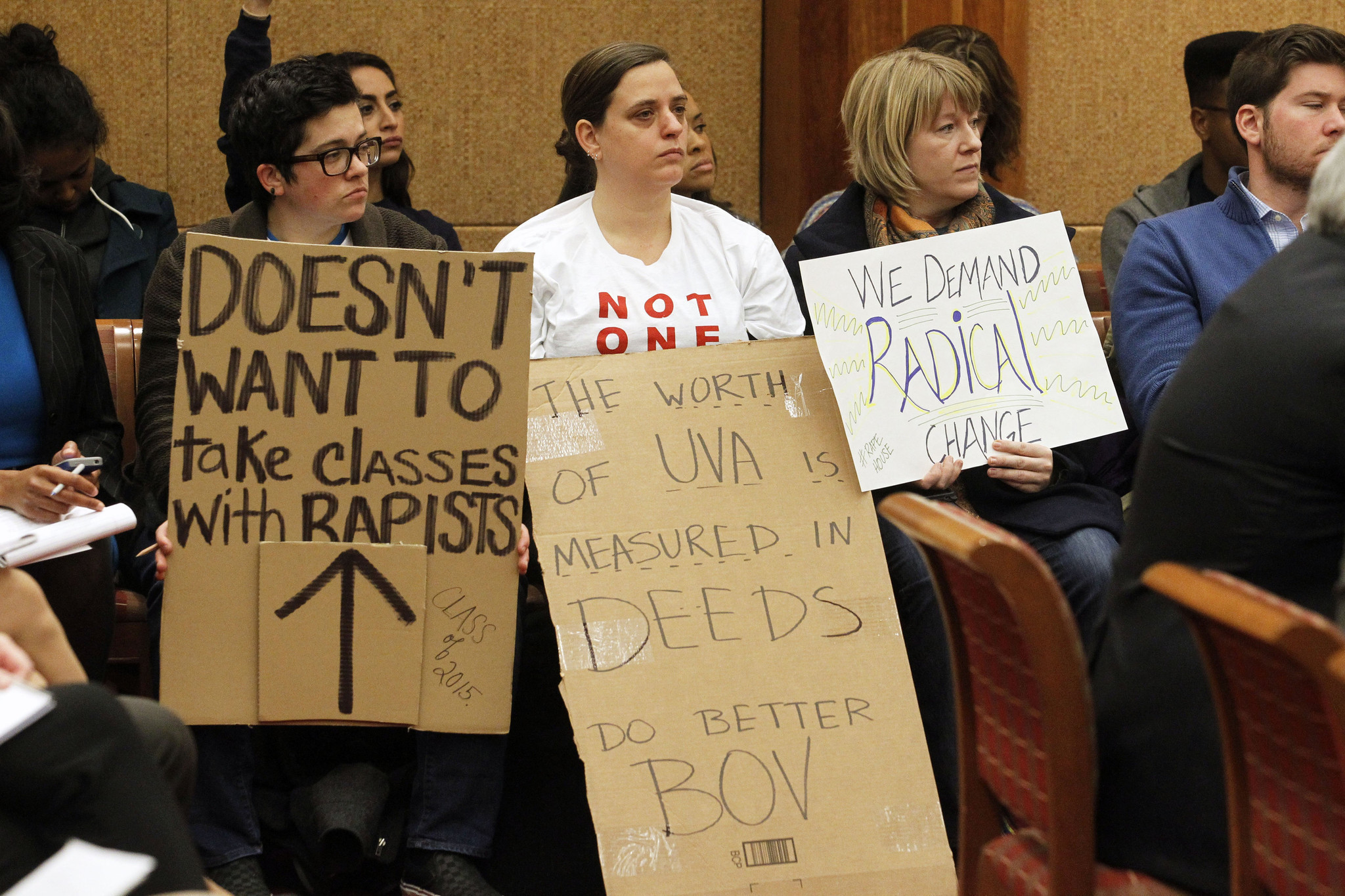
Unfortunately, Rolling Stone’s editor has now used a series of weasel words to say the story was bogus. He admitted none of the alleged rapists were even asked to respond to the charges. A college professor’s inflammatory quote in the article was never even verified that he actually said it.
Again, the story was just too damn good to verify. The magazine took one woman’s story and bought it hook, line and sinker. It was so sincere it simply had to be true. Verify it? Nah.
How bad was the reporting? Susan Miller in a column in USA Today said the 9,000-word story never once used the word “alleged” about the supposed rape. It was a fait accompli to the reporter.
Will Dana, managing editor of Rolling Stone, issued a three paragraph apology Friday afternoon.
Every Public Relations person in the free world knows Friday afternoon is the ideal time to release bad news. Many reporters have left for the weekend. There might be a few stories over the weekend, but audiences are smaller. By Monday the issue is all but dead and gone.
It’s kind of like when a newspaper wrongly blasts someone on the front page, but then apologizes for it on Page E-22. It is the same tactic.
“The problem, as I see it, is that other media outlets are not willing, able, and/or courageous enough to hold their media counter-parts to a higher standard,” noted a Facebook poster.
“The logic appears to be, ‘let’s not point fingers at THEM, because we may make the same mistake and we don’t want fingers pointed at us!’” Sad.”
And with a major media property like Rolling Stone and a circulation of 1.4 million it is doubtful many reporters will hold Dana to the fire on the story. Why didn’t the reporter at least make a veiled attempt to contact the accusers? The rape reportedly occurred in the fall, but pledging is done in the spring. Wasn’t that something easily verified?
Lives and reputations were ruined by this false story. Will Dana be able to keep his job? Will the writer of the story, Sabrina Rubin Erdely, lose her job?
What exactly will Rolling Stone do to mitigate the damage done to the university? Are there any consequences for the magazine other than issuing a disingenuous apology?
Don’t hold your breath.
dis·in·gen·u·ous
adjective \ˌdis-in-ˈjen-yə-wəs, -yü-əs-\: not truly honest or sincere : giving the false appearance of being honest or sincere




HALT RUSH TO JUDGMENT
Dear Mr. Landsberg: Thanks for printing this item. It is increasingly clear that the story of the gang rape in the frat house is untrue. However, I think that it is important not to follow one “rush to judgment” (the unquestioning acceptance with which the Rolling Stone article was initially received) with another “rush to judgment” (assuming that everything that the young woman accuser claimed is totally untrue).
I just read an article in the Washington Post about the three friends she contacted the night that she claimed that the incident took place; they all said that their impression was that she indeed had been through some sort of terrible trauma. Also, the young woman’s roommate said that her behavior changed sharply after the time of the alleged incident. So, speaking as someone who has been a college professor for 34 years and has had to deal with several cases of students claiming sexual assault, it may be that she really was sexually assaulted, but the circumstances of the assault may have been something that made her ashamed so she invented a story that would put her in the role of an totally innocent victim. (I am personally familiar with several cases of that sort of thing happening to students of mine.)
Memo to all of the women’s groups who passionately embraced this story when it came out: Now that this story has turned out not to be the picture-perfect case of campus administration indiffence to sexual assault you are as eager to toss “Jackie” under the bus as you were two weeks ago to make her your poster child. Please don’t do that-let us investigate this story further to find the truth; “Jackie” may indeed have been victimized and if so she needs support and compassion-not abandonment by all of her erstwhile supporters. Take care and God bless. Sincerely, REspectfully and In Christ, Ernest Evans
UNTRUE STORY HURT VICTIMS
I don’t know if you’ve had the chance to follow a development that just came over the wire. A police investigation has followed up the Rolling Stone rape case and was not able to corroborate the reporting.
This is even more upsetting because rape on campus or anywhere else is a serious issue and having a “cry wolf” story only makes it for difficult for victims to get justice.
As I was reading up on this situation, I remembered a documentary that managed to handle rape allegations in a manner that brought a horrific situation to light and even led to some constructive changes to policies that inadvertently helped perpetrators.
Having worked as a military contractor and as the proud relative of people who are currently serving in the U.S. Armed Forces, I’d encourage anyone of age to watch Kirby Dick’s The Invisible War, a troubling look at rape in the military.
Listening to the women and one man describe their assaults is difficult. Dick simply lets them tell their stories, often in eerie candor and with explicit detail. It’s uncomfortable viewing listening to these people recount their suffering, some of which continues to this day. Much of this unease comes from the fact that the perpetrators received appalling leniency.
The film is so effective that then-Secretary of Defense Leon Panetta made a directive demanding that all sexual assaults be handled by officers at the rank of colonel or higher. This prevented commanders from judging cases within their own units. Panetta issued the order two days after watching the film. Similarly, the Marine Corps and the Air Force changed their policies to reduce the number of sexual assaults in their ranks.
Why did this piece of activist filmmaking lead to concrete results in addressing how our society deals with rape and the Rolling Stone report lead to embarrassment?
First, all of the victims who appear in Dick’s film spoke both on the record and on camera. Getting someone to do that require formidable risks to both the subject and the journalist, but in this case it gave the witnesses credibility.
Second, all of the accusers had more than their word to support their assertions. Anyone who thinks that victims deserve to be raped has not heard these people speak. One assailant claimed the victim’s provocative attire drove him to assault her. The outfit in question was her uniform. Further, many of the victims received permanent physical injuries during their rapes. While it’s unfortunate that we can’t simply assume people are telling the truth, the witnesses in this film had more than bad memories.
The success of The Invisible War shows why good reporting, whether activist or not, can do a lot to right what’s wrong with the world. The Rolling Stone piece, however, makes bad situations worse.